Answer-first summary
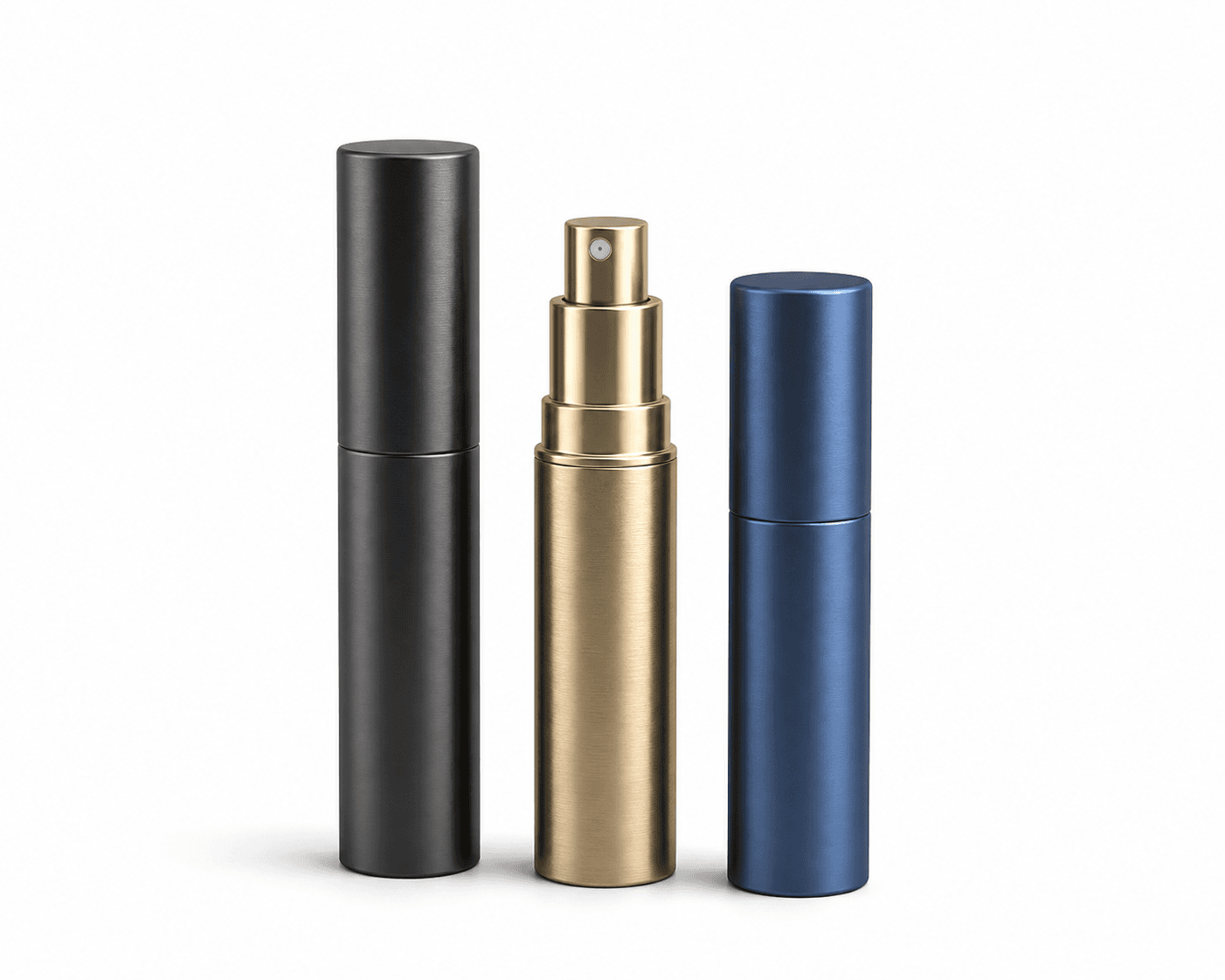
A custom aluminum perfume atomizer should be specified as a complete portable packaging system, not simply as a colored tube with a logo. A buyer needs to decide the refill mechanism and capacity first, then confirm the component combination, finish, decoration method, packaging protection, sample approval criteria, and inspection points. For JASCOPACK projects, models span capacities from 2 ml to 30 ml; the Twist-Up range is presented in 4 ml to 30 ml configurations and uses aluminum, glass, and PP components.
The reliable route to a quotation is to provide a short, complete requirement brief rather than ask only for a unit price. Include the selected model or target capacity, refill method, fragrance application, surface finish, logo artwork, unit packaging, target market, quantity range, and the quality checkpoints that matter to your team. MOQ and lead time should be confirmed against that approved specification; they should not be assumed from a generic product listing.
Introduction: why a “custom atomizer” brief needs more than a logo
For fragrance founders, private-label teams, travel-retail buyers, and procurement managers, a portable atomizer carries outsized brand value. It is handled closely, placed in gift sets, photographed for commerce, and used repeatedly. A seemingly cosmetic choice—matte color, polished cap, or laser-marked logo—can also affect artwork suitability, packing protection, and final approval.
JASCOPACK supports OEM and ODM customization, including silk printing and laser engraving, through a visible flow of requirement review, sample, production, inspection, and global delivery. This guide makes that flow actionable without inventing a universal MOQ, delivery date, certification, or test result; those depend on the approved configuration and acceptance criteria.
Start with the decision: stock configuration or a custom project?
When a stock-led configuration is the sensible first step
A stock-led route fits a first launch, campaign pack, sampling program, or line extension when an available format can be branded without changing the basic form. Select the model, then narrow capacity, color direction, logo placement, and packaging.
It remains a custom project when the customer-facing item is branded. Review the body, cap, spray area, refill area, and proposed logo surface. A mark that looks clear in a flat artwork file can lose definition on seams, curves, ridges, or reflective finishes.
When a more developed OEM or ODM discussion is needed
Use a fuller OEM or ODM brief when the project needs a defined brand color, non-standard retail pack, specific refill experience, matching component direction, or alignment with a bottle, carton, or gift-set insert.
Do not ask a supplier to “make it premium.” Define the intended outcome—an opaque matte body, crisp small logo, metallic accent, protective presentation box, or easy-to-explain refill path—so each item can be sampled and inspected.
Choose the format before the decoration
Capacity is an application decision
JASCOPACK presents capacities from 2 ml to 30 ml across models; its Twist-Up range is shown from 4 ml to 30 ml. Choose by application, not by the assumption that larger is automatically better. A compact discovery pack, travel item, and retail gift set can each need a different balance of portability, filling plan, outer pack, and price position.
Confirm capacity for the exact model, then decide what must be decorated or packed with that size. Branding area can change significantly between a slim and wider body.
Refill mechanism and user journey
Review the refill path early because it shapes customer instructions. A twist-up format may be chosen for the way it protects or reveals the spray head, while another portable format may use a different refill approach. Confirm how the user will fill, close, carry, and store the selected model.
Add a simple use-case statement to the sample request, such as: “This refillable travel fragrance pack must be understandable without a demonstration.” It becomes a shared reference for supplier, brand, and quality review.
Specify the component system: aluminum, glass, and PP
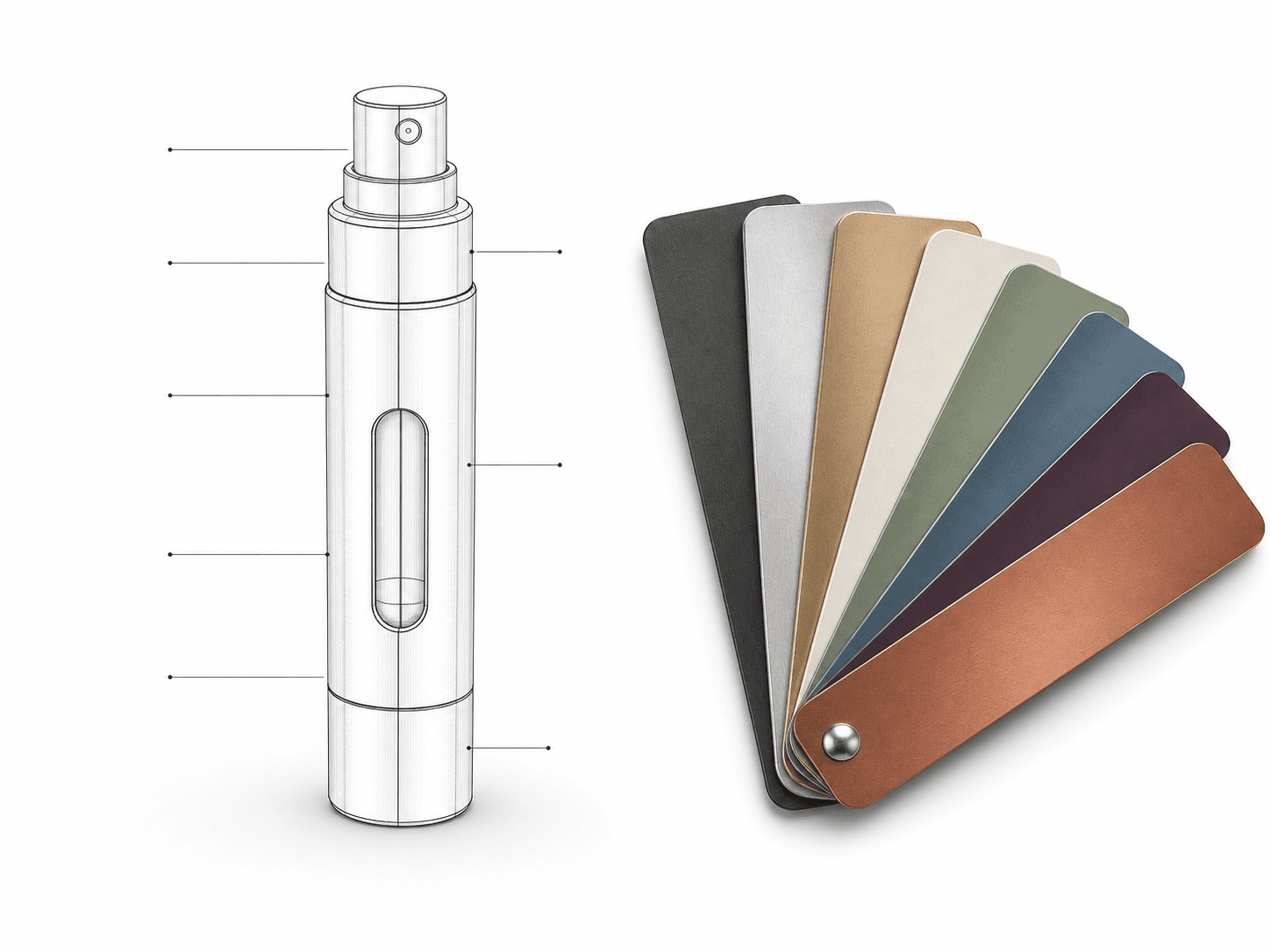
The Twist-Up product page identifies aluminum, glass, and PP as component materials. Evaluate them as a system, not merely as an aluminum shell.
Aluminum: visual presence and surface direction
Aluminum is the visible brand canvas in many portable designs and can support anodized, matte, gloss, metallic, or custom-color treatments. Review it with the logo method, because decoration clarity changes across surfaces.
Specify the visual and tactile outcome: a soft matte body may suit a restrained identity, while a bright metallic effect may suit a more expressive line. Put that direction in words and reference images, then approve it against an agreed sample standard.
Glass: product-contact and visibility considerations
Glass can form part of the inner product system. Ask how the selected model presents it, whether the product is intended to show through it, and what protective packing is appropriate. Raise compatibility or filling concerns with the actual fragrance and filling process in mind.
PP: functional component decisions
PP is listed among the Twist-Up materials and may be used within functional parts. Identify relevant requirements—visual matching, recycling communication, component color, assembly feel, or a restricted-substance policy—so feasibility can be assessed for the selected model rather than through an ambiguous “eco-friendly plastic” request.
Build a finish that works with the brand and the logo
Anodized, matte, gloss, metallic, and custom colors
Finish selection should balance appearance, brand consistency, and the realities of a small curved object. Anodized surfaces can create a refined color direction; matte reduces glare; gloss can make color look more vivid; metallic effects create contrast. Custom colors need an agreed reference and a way to judge the approved result.
Do not approve a finish from a generic name alone. “Champagne gold” and “soft black” are directions, not acceptance standards. Supply a color reference, say whether matching is critical, and identify which surfaces must match when body, cap, collar, and outer carton are viewed together.
Silk print or laser engraving?
JASCOPACK lists both silk printing and laser engraving for logo customization. They solve different branding problems.
| Decision factor | Silk print | Laser engraving |
|---|---|---|
| Typical visual role | Printed logo, text, or graphic in a chosen ink color | Marked logo or text created directly on a suitable surface |
| Best reviewed for | Fine artwork clarity, ink color, placement, and contrast | Mark depth/appearance, placement, and contrast with the chosen finish |
| Artwork preparation need | Clear vector artwork and defined print color(s) | Clear vector artwork and defined mark area |
| Sample approval focus | Edges, registration, legibility, and finish interaction | Legibility, position, surface appearance, and finish interaction |
Neither method is universally better. Silk print can suit a required printed color or graphic expression; laser engraving may suit a restrained marked effect. Choose from the artwork, logo size, finish, viewing distance, and fragrance-line visual language, then approve the selected decoration on the actual project sample.
Prepare artwork so the supplier can evaluate it accurately
Provide editable vector artwork where available, the logo color or marking direction, intended position, minimum clear-space rule, and a reference rendering. If several logo variants exist, identify the one approved for this atomizer.
State what is non-negotiable—a legible small wordmark, a precise color, centered front logo, or serial/lot mark—and what can flex, such as a slight placement adjustment. Connect artwork sign-off to the production sample: maintain one current artwork file, one approved placement reference, and one named buyer-side approver.
Plan unit packaging and shipment protection alongside the atomizer
Packaging is both a product-experience and risk-control decision. A consumer gift item may need a presentation solution; a bulk component for later filling may need a different protective approach. Ask about individual protection, retail-ready outer pack, insert, labeling, or carton identification, and provide the target market and selling channel.
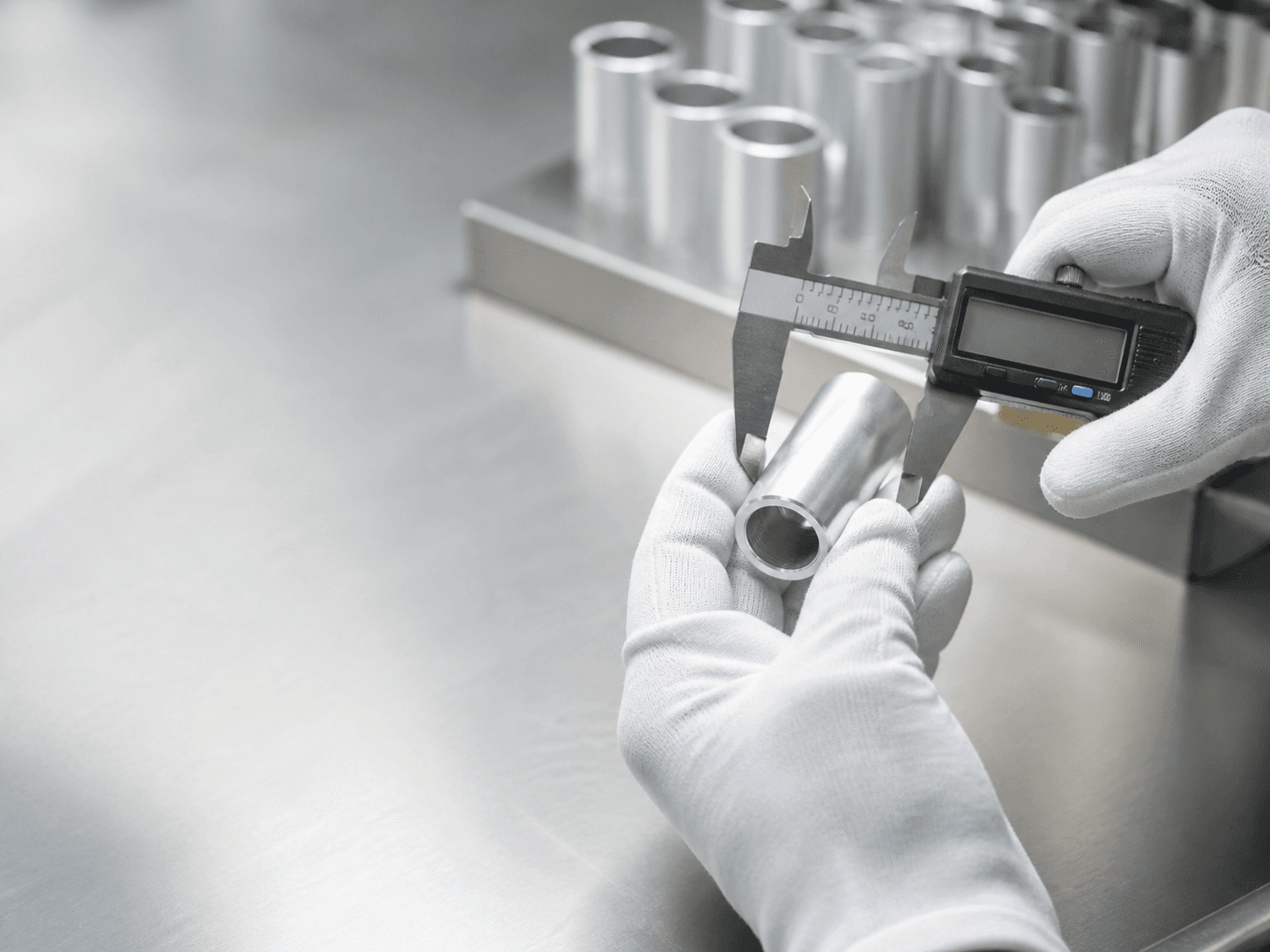
Before global delivery, agree inspection points for finish, logo legibility and location, selected model and capacity, packaging count and identity, and the condition of unit and outer pack. JASCOPACK’s visible process includes inspection; make project-specific acceptance points explicit before production completes. If pre-shipment photos, packing lists, sample retention, or buyer-nominated inspection steps matter, put them in the commercial brief.
Ask about MOQ and lead time without creating false certainty
MOQ and lead time are outputs of the final specification. They can change with model, capacity, finish, decoration, packaging, sample status, and shipment plan. Do not substitute an attractive generic number for project review.
Give a quantity range and distinguish the immediate order from expected repeat demand. State whether the project is a sample, pilot launch, or scheduled retail program, and treat the target delivery window as a planning constraint rather than a reason to skip approval or inspection.
Use these questions in an RFQ:
- Which configuration is being quoted, including model, capacity, finish, logo method, and packaging?
- What quantity range is the quote based on, and which customization choices affect the MOQ?
- What approvals must be complete before production timing can be confirmed?
- What information is still needed to assess packing and global delivery?
- Which inspection and shipment documents can be aligned to the buyer’s release process?
This approach is more useful than asking for “your best MOQ.” It gives the supplier the details needed to respond responsibly and lets procurement compare like with like.
Turn the sample into a formal approval gate
The sample turns visual preference into an actionable standard. JASCOPACK’s visible workflow places sample review before production. Examine the intended configuration: model, capacity, component appearance, finish, logo, unit packaging, and basic product application.
What to check during sample approval
Review the sample in ordinary office and retail-like lighting. Check finish, logo readability at expected viewing distance, and the intended open, close, hold, and refill journey. Flag filling or fragrance compatibility requirements using the actual planned product and process.
Record sample version, artwork version, finish direction, reviewer, changes, and release status. “Approved for body color, front logo position, and unit carton; revise cap appearance” is more useful than “looks good.”
What to align for factory testing and inspection
Factory testing should be tied to agreed requirements. Ask how the supplier will address functional and visual acceptance points, but do not assume a protocol, pressure, duration, or result without confirmation. For portable fragrance packs, discuss spray and refill operation, closure condition, visible assembly, finish, decoration, and selected pack protection.
If leakage risk matters, document it from the start and agree validation and inspection expectations for the selected model. See the forthcoming perfume atomizer leakage testing guide for a deeper checklist. The goal is to define and verify relevant conditions, not to market an item as impossibly “leak-proof.”
A copy-ready custom atomizer RFQ checklist
Use this checklist when contacting a custom perfume atomizer manufacturer:
- Brand and product application: travel retail, discovery set, private-label launch, gift set, or promotional use.
- Preferred model or format, including whether a Twist-Up direction is being considered.
- Target capacity and acceptable alternatives within the relevant model range.
- Desired refill and user experience requirements.
- Component direction: aluminum appearance, glass visibility or filling considerations, and PP-related requirements if applicable.
- Finish: anodized, matte, gloss, metallic, custom color, or reference image/color standard.
- Logo method: silk print or laser engraving; vector artwork and preferred placement.
- Unit packaging, labels, inserts, carton requirements, and selling channel.
- Quantity range, target market, target delivery window, and whether this is a sample, pilot, or production RFQ.
- Sample approval criteria, factory testing questions, shipment inspection points, and desired release documentation.
Frequently asked questions
What capacities can a custom JASCOPACK perfume atomizer use?
JASCOPACK presents capacities from 2 ml to 30 ml across its atomizer models. Its Twist-Up range is shown from 4 ml to 30 ml. Confirm capacity for the exact model and configuration in your inquiry.
Can I add my own logo to an aluminum perfume atomizer?
Yes. JASCOPACK lists OEM/ODM support and logo customization through silk printing and laser engraving. Send vector artwork, preferred placement, finish direction, and any color requirement so the decoration can be reviewed with the chosen model.
Should I choose silk print or laser engraving for my logo?
Choose based on the desired visual result, logo detail, color requirement, surface finish, and placement. Silk print is a printed decoration option; laser engraving is a surface-marking option. Approve the selected method on the project sample rather than from a generic image.
What is the MOQ for custom perfume atomizers?
MOQ should be confirmed for the final configuration. It can depend on the model, capacity, finish, logo method, packaging, and order plan. Provide a quantity range and complete project brief to request a meaningful quotation.
How long does a custom atomizer order take?
Timing should be confirmed after the specification, artwork, sample approval status, production plan, and shipment requirements are known. Avoid relying on a generic delivery promise for a custom project.
What should I inspect before shipment?
Agree the inspection points before production completion. Typical project points include selected model and capacity, finish, logo condition and placement, visible assembly, unit packaging, quantity, outer-carton identity, and release documents. Add any fragrance-filling or performance requirements that apply to your program.
Conclusion: make the custom brief the first quality checkpoint
The strongest custom atomizer projects are not created by adding decoration at the end. They begin with a clear decision about the product application, then connect capacity, mechanism, aluminum/glass/PP components, surface finish, branding, packaging, sample approval, factory testing discussion, and shipment inspection into one traceable brief.
For JASCOPACK buyers, that brief can flow directly through the visible requirement-review, sample, production, inspection, and global-delivery process. The result is a more useful supplier conversation, a more comparable quotation, and fewer assumptions between a brand concept and a finished portable fragrance pack.